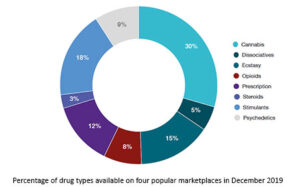
There’s relatively little law enforcement pressure, unlike with harder drugs such as fentanyl and methamphetamines. If it’s hard for experienced cops to distinguish regulated weed from black market products, it can be nearly impossible for average consumers. Advocates of marijuana legalization say it’s disturbing that unregulated weed plays such a big role. California Department of Cannabis Control detectives, with support of Long Beach law enforcement serve a search warrant and remove cannabis products at an unlicensed dispensary in Long Beach, Calif., on March 5, 2024. California is the biggest example of the unfulfilled promise of a legitimate cannabis market.

Economic Impact Of Black Markets
You can’t go around selling other people’s organs and selling recreational drugs. I don’t know myself and I was wondering if anyone knew of children put into slavery or beaten because of the Black Market. Unlicensed gun dealers sold at least 68,388 firearms into the black market between 2017 and 2021, the Bureau of Alcohol, Tobacco, Firearms and Explosives (ATF) said Thursday. Those guns represent 54% of illegally trafficked firearms recovered in that period.
Black Economy: AKA Black Market, Overview And Examples
The former superpower of the world has ever been providing grounds to the illegal activities of trade across its border. Russian black markets have excelled in providing best of the hi-tech machinery and weapons earning great profits which are why the total amount is estimated to $49.09 billion. It is so prevalent in the Russian society that is also termed as the second economy for Russia. For example a black market could arise in order to avoid taxes or price controls, or it could arise to meet unmet demand for illegal products or services.
Everything You Need To Know About Smuggling In No Man’s Sky
- This is particularly evident in developing countries, where informal economies can constitute a significant portion of overall economic activity but offer little in terms of social mobility or economic security.
- Ireland estimates it loses up to $200 million annually with fuel fraud, while up to 20 percent of fuel sold in regular gas stations in Greece is illegal.
- Illicit trade is age-old, a continuous facet and side effect of market economies or of commerce in general.
- One common tactic is misclassifying workers as independent contractors rather than employees.
- The lack of legal oversight enables sellers to charge exorbitant prices, while buyers often resort to black market transactions due to limited access or affordability.
Another problem with driving certain goods into the black market is that, when these goods are sold in secret, there is no one to insure their quality or safety. During the late nineteenth and early twentieth centuries, for example, birth control products were banned in the United States under an antiobscenity law (the Comstock Act of 1873), and a black market arose to supply women with homemade contraceptives. Manufactured by amateurs with no proper oversight, many of these products were defective and even hazardous. Another form of government regulation that often leads to black-market trading is rationing. When basic goods, such as meat and sugar, are in short supply (in wartime, for example), the government may place limits on the amount of that good that any individual can buy in order to make sure the supply gets distributed fairly and no one goes hungry. If individuals who want to buy more than the legal limit are willing to pay an extra price for this service, there will be merchants willing to ignore the government’s rationing limits to sell the goods for increased profit.
“Most jurisdictions — local jurisdictions — police or sheriff’s departments and district attorney’s offices, were very reluctant to do any kind of enforcement on cannabis,” he says. “It really created an air of impunity, and the unlicensed activity really skyrocketed.” Critics say this only serves to perpetuate the illegal and unethical practice of profiteering from someone else’s misfortune, but participating in the underground market is a relatively easy decision to make when someone’s life is at stake. Some people may have no other option but to use underground markets to get the goods they seek in certain situations. For example, suppose you are on vacation with your family in an exotic location and run out of formula for your baby. You may have to turn to the underground market to acquire formula if nothing is available in local stores.
Ready To Explore Web Data At Scale?
By understanding the ramifications of their decisions, consumers can make more informed and socially responsible purchasing choices, diverting their economic support away from criminal organizations. Consumers are often willing to overlook the illegality of a black market transaction if they feel that the good or service is “harmless.” This is often the case with illegal prostitution and also applied to alcohol sales during prohibition. Although some people think that most illegal transactions are relatively harmless, the money generated is often used for nefarious purposes.
Why Do People Engage In Black Market Activities?
Governments often place restrictions on markets because of a philosophical commitment to controlled markets, lack of foresight, martial rationing, or moral ideology. Erika Rasure is globally-recognized as a leading consumer economics subject matter expert, researcher, and educator. She is a financial therapist and transformational coach, with a special interest in helping women learn how to invest. Even after the War of Independence, the government of the United States tried to corral this population.
OPEC’s Control Over Global Oil Prices Slips Away
All such under-the-table transactions, in which participants fail to report their income to the IRS or the state, are technically considered to be underground economic activities. This status can even apply to babysitters who don’t report the cash that they pocket after watching a neighbor’s child down the street. Legal bans sometimes lead to the creation of a black market, which then makes it difficult to eliminate. A Stanford University research titled “Forbidden Transactions and Black Markets” by Chenlin Gu, Alvin E Roth, and Qingyun Wu goes on to say that legal marketplaces attract participants by trying to make the market safe and reliable. Personal networks are the preferred system; it virtually exists on a bond of trust. Beckert’s research also looked into the cooperation between business players in the absence of legal protection and government sanctity in the black market.
- You can only find these at abandoned outlaw stations–or perhaps we should say “abandoned stations under new outlaw management”.
- Governments, businesses, and consumers must work together to combat these activities, implementing effective measures and regulations to mitigate the negative economic effects.
- Also known as the “underground economy” or “black economy” these black markets are most elusive places where the law has no grounds.
- It is one of the most active and up to date markets and always provides new and updated malware and data.
- They can negatively impact the economy because there is no reporting or tax collection.
Which Country Has The Largest Underground Economy?
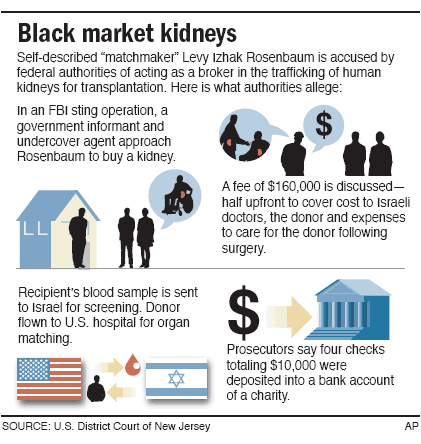
Organ transplant procedures require a high level of technical knowledge, so traffickers use legitimate medical providers, such as certified doctors and hospitals. These medical professionals—including nephrologists (kidney specialists), anesthesiologists, and transplant surgeons—are rarely convicted for their involvement in illegal organ trafficking. In the midst of this intricate web, consumers find themselves navigating ethical dilemmas as they make choices that can either perpetuate or discourage illegal activities within the black market. The power to shift the tide ultimately lies in the hands of individuals who can make informed and socially responsible decisions, understanding the broader consequences of their actions.
While some offshore banking is legal, failing to report foreign assets can lead to severe consequences. Under the Foreign Account Tax Compliance Act (FATCA), U.S. taxpayers with foreign financial assets exceeding $50,000 must report them to the IRS. Failure to comply can result in penalties of up to $10,000 per violation, with additional fines for continued noncompliance. Businesses use ultraviolet scanners and counterfeit detection pens to mitigate risks. Retailers and financial institutions train employees to recognize security features in banknotes.
It is estimated that Nigeria alone loses US$1.5 billion a month due to pipeline tapping, illegal production and other sophisticated schemes. In Southeast Asia, about 3 percent of the fuel consumed is sourced from the black market, estimated to be worth up to US$10 billion a year. The illegal wildlife trade is another example, with products like ivory, rhino horn, and exotic pets being sold despite international bans.
Get Legal Help For Any Legal Need From People In Business
In regions where underground financial systems, like informal money transfer networks, replace traditional banking, authorities face challenges in monitoring capital flows, increasing the risk of money laundering and financial crime. Cash remains a preferred medium of exchange for many illegal transactions due to its untraceable nature. Digital currencies like cryptocurrency have also become prevalent, offering anonymity for online black market activities. By engaging in trade-related black market activities, criminals can tap into global networks and exploit gaps in regulatory systems. The funds generated through these illegal trades are then funneled into various criminal activities, perpetuating a cycle of illicit operations that pose significant risks to society and national security.