A single careless click can compromise your entire digital ecosystem. By using Tor and a reputable VPN, along with being careful and having the right tools, you can browse the dark web legally and safely. Responsible use protects your privacy while staying within the law, so it’s a safe place to browse for real privacy reasons. Haystack doesn’t track or store your search queries or personal data, which is critical to maintaining anonymity on the dark web. This aligns with the general ethos of privacy on the Tor network.
Is The Dark Web Actually Anonymous?
Hypothetically speaking, Google may be aware of well over 200 trillion individual pages (these are obviously NOT all indexed in the search engine). Did you know that Google only shows you a glimpse of all the websites that actually exist? The last time I checked, it’s estimated that the entire web is roughly 500 times larger than what Google returns in Google Search. Individual sites on the dark web look much like they do on the regular web, though a lot of them are a bit more rough around the edges.
Gannicus Oliver is an experienced tech journalist (he loves writing on emerging techs and digital privacy issues) and an online business consultant. In his free time, Gannicus enjoys uncovering thrilling adventures and traveling around the world. Since their deadline wasn’t met for the closer of the sites a month later, the Impact team ascended to the dark web, where they started to publish the data. Also, your data is more likely on the deep internet in one way or the other. But you have to keep your fingers crossed that it remains there and hope the party holding your data (the school or hospital records department) keeps it according to the GDPR standards.
The website could only see the IP address of the last server (exit node), not our actual IP address. Whenever you visit any website, click the circuit button next to the domain to open a menu displaying the servers through which your traffic passes. As illustrated in the screenshot below, our request was routed through servers in Luxembourg, Germany, and Austria when visiting TechRadar.com.
- Carrying on with the analogy, big search engines could be considered like fishing boats that can only “catch” websites close to the surface.
- The deep web is the hidden and invisible part of the internet that lies behind the paywall.
- And while the dark web isn’t synonymous with illicit activities, it’s undeniably the breeding ground for the internet’s black markets, hacker forums, malware vendors, and other illegal activity.
- Even when using security measures and your common sense, accessing deep web content still poses a risk.
- For example, the deep web is often a platform used by political activists who own a blog.
The Hidden Wiki & Co

The dark web has several convenient uses, which are not all basic. People who live under a government that deeply supervises or censors internet traffic eventually get attracted to the dark web. However, it’s illegal if you venture into the dark web to commit unlawful actions such as downloading child porn, buying fake documents, drugs, credits card, and more. The other group of people is the one that requires the secrecy of the deep web to avoid pessimistic consequences – and to avoid trials. This group consists of a populace whose actions on the internet would rapidly lead to imprisonment or fines.
Social Media
The release of Freenet in 2000 is considered by many as the start or founding of the dark web. University of Edinburgh student Ian Clarke created Freenet as a thesis project. Freenet was originally intended to provide a way to anonymously interact online, providing ways to communicate, exchange information and files, and to otherwise communicate incognito. But human trafficking, illegal pornography featuring underaged victims, money laundering, and assassinations are also examples of the darkest corners on the dark web. Silk Road became one of the most famous online black markets on the dark web for illegally selling drugs. For example, the deep web is often a platform used by political activists who own a blog.
Protect Your Accounts With Strong Passwords

There is no reason why you shouldn’t enjoy the technology that allows you to protect your identity and browsing habits from ISP, advertisers, and more. Now that you know how to access the dark web wisely and safely, you can broaden your horizons without being caught up in illegal or criminal activity. Or, it could even be a law enforcement agency trying to obtain data and identities of people involved in illegal activity. Tor is based on Firefox and can provide results from the so-called surface web, as well as the dark web. There are search engines specifically for the dark web, but still the results shown are often irrelevant. If you have an address of a dark website, make sure it’s legit because the dark web is full of bait for new users.
I2P (Invisible Internet Project)
However, since it is so popular, you will find several versions of the program on the internet. These are unreliable copies that can cause you to download malicious content on your computer. That is why you should only download the Tor browser from its official website. Yes, if you don’t use a VPN, your ISP can see that you’re connecting to the Tor network. Once you’ve learned how to use it, Tor isn’t as intimidating as it can seem at first.
- The Dark Web is not separate from the Deep Web, but rather it is a portion of the Deep Web.
- The Tor Browser is the most popular browser for the dark web, but other popular options exist, like Brave, Comodo Dragon, Epic and SRWare Iron.
- Since its launch in 2008, ExpressVPN has helped businesses and individuals stay private and safe online.
- For all intents and purposes, click Connect to get onto the Tor Network.
- It’s just one of the examples of how the internet and media has twisted the truth about the deep web over the past couple decades.
Deep Web Guide: Getting There & How It Differs From The Dark Web
Downloading tainted files or clicking suspicious links can install malware on your device, so be cautious when surfing the web. You can use a VPN if you’re in a country that restricts or heavily monitors Tor usage. You can also use it if you don’t want your network administrator or ISP to be aware of your Tor usage. However, if you don’t fall into these categories, or are a high-risk internet user (e.g., an investigative journalist or whistleblower), combining a VPN with Tor might be unnecessary. To surf the web privately, you need to connect to the Tor network from your browser. Manually implies clicking the Connect button each time you open Tor, while automatically means an automatic connection whenever you open the Tor browser.
Exiting Safely
Gizmodo may earn a commission when you buy through links on the site. Let’s summarize the most important points from this guide on how to access the dark web. This, joined by incredible value and the price of around $2/mo, makes PIA very attractive. Unfortunately, it’s slower than NordVPN and ExpressVPN but overall, its performance is admirable in practice. Private Internet Access even offers the Shadowsocks proxy for added security. There’s also MultiHop that boosts your encryption, along with MACE which blocks tracking.
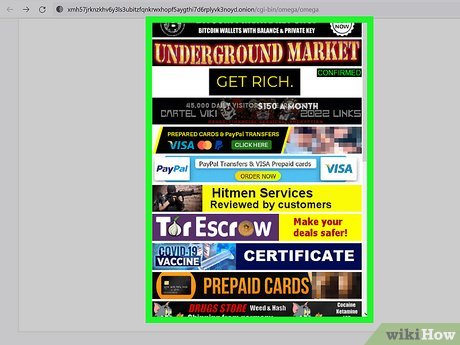
End User Protection Against Exploitation By The Dark Web
Accessing it without proper protection exposes you to surveillance, tracking, and potential security risks. If you need to access the dark web, NymVPN can add an essential layer of privacy and anonymity, encrypting your connection before you even access the Tor network. In theory, being tracked over Tor is possible but it’s not easy. Tor hides your real IP and your browser activity from your ISP by changing your circuit – the network nodes used to reroute your data – every ten minutes. This means that government entities may control some nodes themselves.
Sections of the dark web are often closed down too, as part of police operations. Even if you’re using a private, anonymized crypto wallet, there are other ways your identity can be revealed—even if it’s something as simple as letting a personal detail slip in an instant message. DuckDuckGo is the default search engine inside the Tor browser, and once you turn on the Onionize toggle switch in the search box, you’re able to use it to find dark web links. These typically come with “.onion” after them, rather than something like “.com” as on the standard web.