While his ‘shrooms sprouted, Ulbricht taught himself computer programming. When he got confused about coding, he called on an old college friend, Richard Bates, a programmer at eBay. Ulbricht’s girlfriend and Bates were the only people he told about his project. He hid it on Tor (The Onion Router), a browser system invented by the Navy that relies on layers of computer routers and is now used by dissidents, drug sellers and pornographers to cloak their Web activities. He set up the site to accept the cryptocurrency Bitcoin, evading both banking and government oversight. The Silk Road site was set up by Ulbricht in 2011 on the dark web, a part of the internet that’s inaccessible to traditional search engines.
A $19bn Industry Is About To Pay Its Workforce For The First Time
The site’s use of Bitcoin for payments helped to legitimize the cryptocurrency and increase its value. It also made it easier for people to make anonymous transactions, which was a key feature of Silk Road’s success. Carl found himself on friendly terms with Ulbricht, who had no idea he was speaking with a DEA agent.
Overflow: Hidden;
His SAT scores got him a full scholarship to the University of Texas at Dallas, where he worked on organic solar cells, a burgeoning branch of green energy research that relies on polymers rather than traditional materials. Ulbricht’s exchange was the logical extension of Craigslist or eBay or Uber, a company matching customers with providers and collecting a fee, although in this case the buyers weren’t seeking poodle ashtrays or a ride in a Prius. If hailing a cab seems out of date, so too is walking around a city park hoping to score some weed. Soon the two become inseparable, and when he jokingly suggests launching a website from which dealers can easily sell drugs, both Julia and Ulbricht’s best friend Max (Daniel David Stewart) are happy to go along with his wild scheme. “We saw murder-for-hire postings, hacking-for-hire postings, which was, ‘hey, pay me two bitcoin and I’ll hack into your ex-wife or ex-husband’s email account,'” Patel said. “…It was totally anonymous. And you could never trace it back to the person who asked for it.”
Silk Road Assets And Bitcoin
- The site was accessible only through a network known as Tor, which exists mainly to anonymize user data and activities online.
- While darknet sites were early adopters of Bitcoin, Ross Ulbricht did not develop any cryptocurrency.
- After an enormous amount of sifting, they discovered that only four days after the first Silk Road blog went up, a user named Altoid posted about it in a small-time discussion forum.
- In one long entry dated simply “2011,” he described the early days of Silk Road.
- We’ll discuss the ongoing operations of these markets, their volatility, and the methods used to access them.
His lawyer Joshua Dratel said that he would appeal the sentencing and the original guilty verdict. On an October midday in a public library in San Francisco, Ulbricht’s goal of an online libertarian paradise came to a sudden end. The FBI had finally caught up with Ulbricht having infiltrated the Silk Road. Besides, as the site evolved, more and more ‘contraband’ products started to be posted.
What Followed Silk Road On The Darknet?
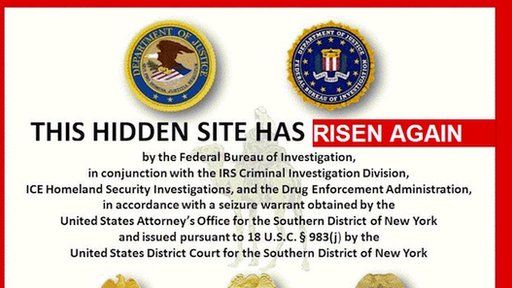
When Ulbricht turned to look, another woman sitting across from him gracefully swooped up his open laptop and then passed it to a man walking by, mid-stride. By the time Ulbricht realized that everyone involved in this scene—the new employee, the arguing couple, the woman across from him, the man walking by—were all undercover agents, he was already in handcuffs. On his laptop’s screen, agents found him logged into the Silk Road as the head administrator. The FBI seized the Silk Road servers and served Ulbricht a warrant for Ross Ulbricht, alias Dread Pirate Roberts. Dratel told Newsweek the government’s reliance on metadata bodes ill for defendant rights because it is easily manipulated.
They also argued the evidence against Ulbricht was circumstantial, and that the government had violated his Fourth Amendment rights by conducting warrantless searches of his laptop and other devices. To access Silk Road, users needed software known as Tor (commonly referred to as “The Tor Browser”), a web browser initially developed by the U.S. Silk Road’s address used a bunch of random numbers and letters that ended with dot onion (.onion), the core domain extension for the dark web. “I’ve essentially ruined my life and broken the hearts of every member of my family and my closest friends,” he said. He walked out of the courtroom carrying with him photographs of those who died as a result of drugs purchased on his website. Ulbricht was accused of using a Bitcoin-based payment system to facilitate illegal activity on the site, and he used a special network to conceal the identities and locations of its users.
What Was Silk Road And Who Is Ross Ulbricht?
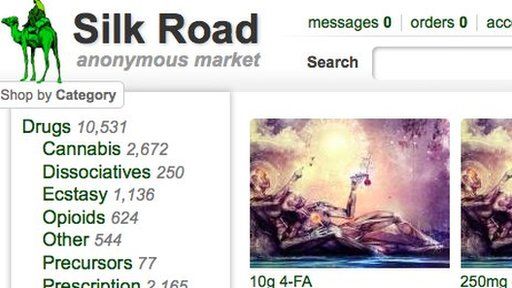
And although the Silk Road site hasn’t operated for years, it laid the foundation for other darknet markets to follow. Today, Silk Road is an important case study when analyzing the growth of other dark web markets. The Silk Road website sold mainly drugs (illegal narcotics, prescription medication), illicit goods (forged documents, pirated media), and some legitimate goods (books, apparel, services).
Why Did The FBI Crack Down On The Silk Road?
Despite that, Dr Barratt also said that the death of Silk Road fundamentally shifted illegal drug trades on the deep web by sparking dozens of copycat websites. “The kind of connections between the libertarians and cryptocurrency … were the way that Silk Road operated and the way that dark net markets that arose after Silk road was shut down by the FBI were operating. “Silk Road has emerged as the most sophisticated and extensive criminal marketplace on the internet today,” FBI agent Christopher Tarbell said in a criminal complaint lodged by the agency in 2013. Mr Trump on Wednesday said in a post on his social media platform Truth Social that he had called Ulbricht’s mother to deliver the news of his pardon. President Trump fulfilled a campaign promise to Libertarian supporters on his second day back in office by pardoning the former creator and owner of an underground e-commerce website known for drug trafficking.
The Silk Road black market was a philosophical venture as well as a financial one. The Silk Road definition was a reference to the ancient trans-Eurasian trade route, which brought many different cultures and ideas together in a relatively peaceful manner. The Silk Road website’s founder, Ross Ulbricht (AKA “Dread Pirate Roberts”) sought to emulate this ethos — but failed. The Silk Road website was an anonymous internet marketplace active from January 2011 to October 2013. Accessible through encrypted dark web browsers such as Tor, Silk Road was known as a hotbed of illegal activity facilitated by cryptocurrency, and served as one of the initial use cases for Bitcoin.

What Happened To The Seized Bitcoins?
Just what role Ulbricht will play in the free world is far from clear. Even in his statement to the judge at his sentencing hearing in 2015, Ulbricht never fully acknowledged the harm inflicted by the Silk Road’s drug sales. And according to Jared Der-Yeghiayan, a former Homeland Security Investigations agent who infiltrated the Silk Road during the investigation, Ulbricht still shows little remorse for his actions in his public posts to X.
Ross was proud of what he’d created and even did an interview with Forbes magazine – careful to hide his identity. Vincent D’Agostino Ross was the boss and below Ross was … like the consigliere would be — in a traditional organized crime family. … And then, below that, his soldiers, which were his lower-level employees that didn’t know too much but were doing the mop-up duty. Silk Road was processing millions of dollars of transactions each month, with Ross taking a cut on each one. When FBI agents got the case, they only knew the site was run by someone using the alias “Dread Pirate Roberts,” a famous movie character. Whether you venture into the deep dark web yourself or your information ends up there via a data breach, early identity threat detection is key to preventing lasting damage.
Green would be the first to admit that he was too chickenshit for suicide. He ran into the living room and threw himself onto the couch, where his Chihuahuas joined him, licking his face while he fell to his knees to pray. Eventually Green decided to get up, get his phone, and call DEA special agent Carl Force.
He even went on the site and made more than 50 undercover purchases. But his biggest “get” came in the spring of 2013, when he located one of Dread Pirate Roberts’ deputies who created the screen name “Cirrus.” At the time, one of the only people who knew the real identity of DPR was Julia Vie. After several years of dating, she and Ross had ended their relationship in 2011. Looking for a new perspective, prosecutors asked the New York FBI cyber branch to join the hunt.