Despite the term suggesting cohesion, the IDW is not a formal group but a categorization for individuals promoting open dialogue on sensitive topics, ranging from political correctness to free speech. The diversity within the grouping is significant, with members holding varied—and sometimes conflicting—ideological stances. For instance, while Sam Harris has participated in discussions with other IDW figures, he has explicitly critiqued the label and distanced himself from some of the collective’s broader political implications. After the 2020 US presidential election, in response to statements by some of those considered members of the IDW that the election was stolen, Harris was quoted as saying he was “turning in his imaginary membership card to this imaginary organization.” Just below the surface of the roiling debates about how and why our country got into its current predicament, a radical movement is afoot.
The Intellectual Dark Web: A History (And Possible Future) By Jamie Q Roberts
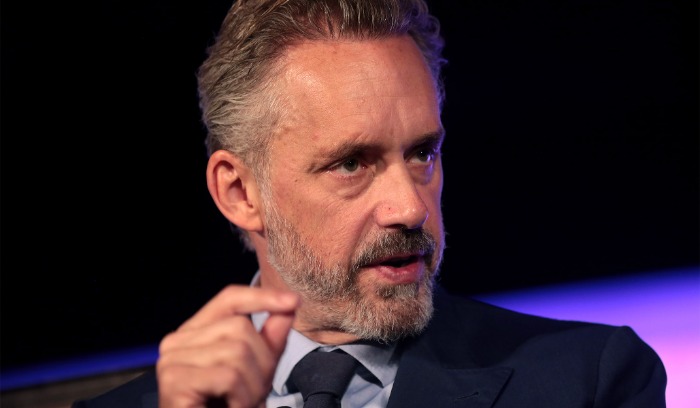
Peterson had been an obscure University of Toronto psychologist whose Jungian psychology–based first book, Maps of Meaning, reportedly sold about a hundred copies when it was first released in 1999; Weinstein and Heying had been faculty members at a tiny, very left-wing liberal arts college in Olympia, Washington. The intellectual dark web is perhaps a silly name for the group of thinkers it describes, but the search for a novel term does point to the radical transformation of American politics in our current moment. Donald Trump’s election has set off a chain reaction that has caused a great many Americans to rethink their ideological commitments and the place of those commitments within the broader society. For the people like Harris, Peterson, Rogan, Rubin, Sommers, Shapiro, Maher, and Weinstein, the noxious effects of political correctness on American society was the central lesson to be drawn from this recent history. And if the often glowing portraits of the dark web in publications like The New York Times and The Atlantic are any indication, or Peterson’s appearance at this year’s Aspen Ideas Festival, many liberals seem to agree.
The White House Says Trump’s Tariffs Have Raised $8 Trillion In Revenue That’s Not Even Close
It refers to a burgeoning group of thinkers looking to create a space where cultural discourse is both civil and fact-based. Others have argued the IDW is nothing special, just a new to sell dated and bad ideas. YouTube also discontinued its “related channels” feature, which factors heavily in the study, back in May, according to a post on the YouTube community forum. But even in light of these changes, due to the lack of transparency surrounding YouTube’s algorithms, it’s difficult to know how effective these changes have been, or whether an even broader swath of YouTube users were exposed to such content prior to the researchers authoring their study. The financial and foreign policy disasters brought on by Bush’s policies led the public to overwhelmingly reject Republicans in 2008 as the first-term Democratic Sen. Barack Obama swept into the White House.
Now, its ideas and figures have helped elect a president, and some of them – Musk, Gabbard and Kennedy Jr – have roles in Trump’s administration. The intellectual dark web became increasingly well known during the first Trump presidency. Roberts wanted to write a book about the IDW because the battles of the figures within it were his own battles, he explained to me. “Since 2002 I had been struggling against identity politics and postmodernism, and trying to talk about the corrupt university hierarchy, the failures of liberal feminism, the wisdom in classic works, and so on and so on.” However, while there is some debate about whether the one-day white absence from the Evergereen campus was meant to be voluntary or enforced, the activist students’ ugly physical intimidation of both Weinstein and the college president was captured on video.
What Happened To The Intellectual Dark Web?
The need to build new tribal nations is made all the more pressing by Liu’s prediction of a Great Flood (Dàhóngshuǐ 大洪水), an impending apocalyptic event that will see much of the world’s central governments collapse. It was partly on Douban’s Auntie-loving Distant Evil 远邪 discussion board that the term “white left” was popularized, according to Fāng Kěchéng 方可成, academic observer of reactionary discourse. Liu’s later publications, including one of David Hume’s Tory revisionist The History of England and a biography of Ayn Rand, received mixed reviews (his skills as a translator have been called out repeatedly, most notably in this piece by Méi Zǔróng 梅祖蓉 for The Paper. “Strange how we once thought that the purpose of academics was to put forward bold ideas for the greater good of society,” Roberts told me. “Now the purpose of academia is for pseudointellectuals to trade fashionable lies so that they can build their pseudo careers.” But after experiencing decades of censorship in one form or another, Roberts wasn’t going to compromise. “Pretty funny that the first major book about the premiere free speech movement of our time was silenced,” he says.
It was in a flurry of reports over such campus controversies that Richard Bernstein helped popularize the term “political correctness” as we know it today. The 1980s–1990s political correctness debates were in many respects debates over the legacy of the radical politics and counterculture of the 1960s. Allan Bloom kicked things off with his 1987 best seller The Closing of the American Mind, which argued that the influence of ’60s-era student, feminist, and Black Power movements led college students to reject traditional liberal arts curricula. Roger Kimball later upped the ante, alleging that the professors of the 1980s were former student protesters. Frustrated by the failure of their movements to destabilize American society, Kimball claimed, they channeled their discontent into “politically motivated” fields like queer theory or African-American studies, said to be inspired by “postmodern” Continental thinkers like Michel Foucault and Jacques Derrida. The IDW figures were hardly the only public intellectuals critical of the rise of illiberal progressivism in academia, social media, and mainstream journalism.
Share This Article
Some of the people mentioned in it, such as Sam Harris, have already distanced themselves from IDW to maintain their intellectual independence. Also per the subtitle, Roberts suggests that the intellectual impact of IDW will last much longer. Every radical feminist I knew in 2015 got cancelled by the left for thoughtcrimes against transgender ideology and the glorification of ‘sex work’.
Videos All Videos
Interestingly, in the week after the election, MSNBC’s viewership was down 39% and CNN’s down 22%, compared with their October averages. Every US election throws up a cast of figures adjacent to the campaign who endorse one candidate or another. Kamala Harris had a long line of celebrity backers, from Beyoncé to Bruce Springsteen.
Image For IDW
The main attraction of Harris and Shapiro’s conversation was not their philosophical sparring, but their show of solidarity against the left-wingers that had attacked them both. In the face of the politically correct left, and to a lesser extent the neo-fascist alt-right, these thinkers aim to present themselves as defenders of “reason,” “truth,” and “facts.” This attachment to rational principles — not to parties or tribes — leads them at times to characterize themselves as a new political center. Some early critics, such as Henry Farrell at Vox, argued that the stars of the IDW were “white intellectuals” resentful of being displaced from a dominant cultural position and having to endure pushback against their ideas, including sexist and racist ones. Columbia University professor and author John McWhorter, a liberal critic of the progressive left with no connection to the IDW (despite jokingly describing himself in a 2018 podcast as part of “the black wing of the Intellectual Dark Web,” a casual comment which he ruefully notes has “resonated for years”), is harshly dismissive of critiques like Farrell’s. “It’s Critical Race Theory-speak, this idea of white people circling their wagons.”2 One could also argue that the stars of the IDW were far too eccentric to have been in a culturally dominant position prior to the cultural shift toward identity politics and social-justice progressivism in the 2010s.
Why Is Ethics Assumed To Play No Role In Our Lives By The Intellectual Dark Web?
For that hope to be realized, we have to remember that there are lots of birds in the nest, not just one crowing rooster. The nest of free thinkers includes, to name just a few, Claire Lehmann, founder and editor of the online magazine Quillette, the bioethicist and author Alice Dreger, and Bret Weinstein and Heather Heying. The latter two are husband-and-wife biology professors who were driven out of Evergreen State College last year amid an utterly nonsensical controversy in which leftist student protesters decided to paint Weinstein, a lifelong political progressive and anti-racism activist, as a white supremacist. He is also a research fellow at the Mathematical Institute of Oxford University. Weinstein speaks and publishes on a variety of topics including, gauge theory, immigration, the market for elite labor, management of financial risk and the incentivizing of risk taking in science. And he, along with brother Bret—whom I just did a podcast with in Seattle—has become an unusually powerful advocate for free speech.
- The ranks of the cranks also include author and podcaster Maajid Nawaz, briefly mentioned in the original IDW piece as a “former Islamist turned anti-extremist activist”—now a vaccine and 2020 election conspiracy theorist, and most recently seen boosting the Kremlin’s efforts to link Ukraine to the ISIS terror attack in Moscow.
- You may be recognized as a member of a minority that needs to be acknowledged, and as a possibly unreliable ally against Donald Trump Republicanism.
- Whatever the adjectives, it’s a group of people, many of them familiar to Reason readers, who are interested in free speech and free thought, sensitive to intellectual conformity, and adept at using new media to route around hostile gatekeepers.
- LIWC relies on decades of empirical research and provides specialized means to comprehend, elucidate, and quantify psychological, social, and behavioral phenomena.
In This Article:

Google has a huge effect on what we think, because it has a huge effect on what we see when we search for things. It understands or at least is capable of evaluating our email for patterns and figuring out what it is that we’re beginning to suspect. Google is a very dangerous entity if it decides to take an active role in controlling what conversations can happen, and Google has told us that at the very top, it is actually interested in seeing some conversations silenced. That should worry us at least as much as what’s going on on college campuses, which is itself not a small matter. Whatever the adjectives, it’s a group of people, many of them familiar to Reason readers, who are interested in free speech and free thought, sensitive to intellectual conformity, and adept at using new media to route around hostile gatekeepers. Their ranks are generally said to include Jonathan Haidt, Dave Rubin, Jordan Peterson, Sam Harris, Ayaan Hirsi Ali, Claire Lehmann, and James Damore.
Discover Content
Put simply, “in the Postmodern tradition, problems come from discourse and are thus solved by changing discourse”—that is, ‘no debate’. Any attempt to widen the acceptable range of opinions on campus is deemed ‘harmful’ and subject to protest. What united the IDW, he argues, and may yet be its legacy, is that culture of spirited, open debate that entertains false positives in search of true ones. The IDW defined itself against the ascendant culture of ‘no debate’, and Rogan hosted those forbidden debates. Springer Nature or its licensor (e.g. a society or other partner) holds exclusive rights to this article under a publishing agreement with the author(s) or other rightsholder(s); author self-archiving of the accepted manuscript version of this article is solely governed by the terms of such publishing agreement and applicable law. In 1982’s Orality and Literacy, Ong theorised that literacy is so profoundly mind-altering that it “restructures consciousness”.
The conditions for constitutionalism come down to the situation in Washington. As Marx would say, they’re the big landlord, the big capitalist… It would be like Marx establishing a Jewish state on the Rhine after a Thousand-Year Reich… The truth is that all the methods that hold China together would have to be torn apart to implement constitutionalism. In order to carry out constitutionalism, there would have to be a complete refutation of Leninism… Like the Israelis, the Chinese might escape from slavery only to find themselves wandering in the desert. “I was told that there had been complaints; however, despite asking, I was never told who complained nor the nature of the complaints,” continued Roberts. “The book was then investigated and it was determined that it could not return to sales in its current form.”